The 5 Most Common Mistakes New Tortoise Keepers Make
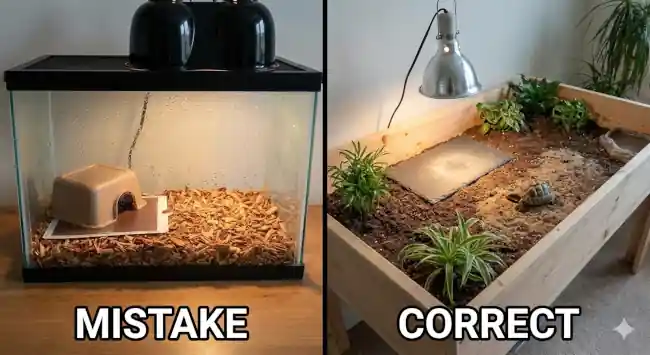
Bringing a new tortoise home is exciting, but these ancient reptiles have very specific needs that are often misunderstood.
Unlike a cat or dog, a tortoise cannot bark to tell you when something is wrong. Often, by the time a keeper realizes their mistake, the health issues are already advanced. Here are the five most common errors we see in the UK, and simple ways to correct them.
1. The "Glass Tank" Trap
Many new owners mistakenly buy glass aquariums or fish tanks. These are generally poor choices for tortoises because they trap humidity without ventilation (leading to respiratory issues) and the transparent walls can stress tortoises who don't understand invisible barriers.
The Fix: Use a Tortoise Table or a large, ventilated Wooden Vivarium.
In the UK, where winters are cold, a wooden vivarium can actually be superior for holding essential heat and humidity, provided it is large enough to allow for a proper "cool end" so the tortoise can regulate its temperature.
2. Diet: The "Iceberg Lettuce" Myth
Feeding a tortoise supermarket salad sounds easy, but iceberg lettuce is mostly water with zero nutritional value. It's like feeding a child cardboard.
The Fix: Aim for a high-fibre, calcium-rich weed diet. Dandelion, plantain, and clover are free and perfect for them. If you must buy food, look for Florette mix or Lamb's Lettuce, and always use a calcium dust supplement.
3. Neglecting UV Bulb Replacement
Your heat lamp might still be glowing, but that doesn't mean it's working. UV bulbs degrade over time. After 6-12 months, many stop emitting the UVB rays your tortoise needs to synthesize Vitamin D3. Without it, they cannot absorb calcium, leading to Metabolic Bone Disease (MBD).
4. Incorrect Hibernation
Attempting to hibernate a tortoise that is underweight or sick is dangerous. In the UK, our winters are damp and fluctuating. "Garden hibernation" is risky. We strongly recommend the "Fridge Method" for controlled temperatures, or overwintering (keeping them awake) for the first year if you are inexperienced.
5. Assuming They Are "Easy" Pets
Tortoises are often sold as low-maintenance pets, but they require daily cleaning, specialized lighting, and routine vet checks. They can live for 60-100 years. They are a lifetime commitment, often outliving their original owners!
Looking for a safe place to buy a healthy tortoise? Check our verified listings to find responsible breeders near you.