The Complete Legal Guide to UK Tortoise Ownership (2026)
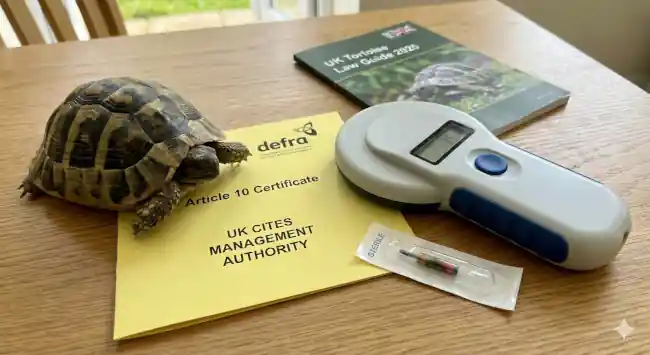
Thinking of welcoming a tortoise into your life? These amazing reptiles make fascinating, long-lived companions, but owning one in the UK comes with strict legal responsibilities.
Unlike buying a hamster or a dog, buying certain tortoise species is governed by international endangered species laws (CITES). Getting this wrong can result in the animal being confiscated or even prosecution. This guide breaks down exactly what paperwork you need.
1. The Big Distinction: Annex A vs. Annex B
UK law classifies tortoise species into two main categories based on how endangered they are. This classification dictates the paperwork you need.
Annex A Species (Strictly Protected)
These are the most common garden tortoises in the UK. Because they are vulnerable in the wild, commercial trade is strictly controlled.
- Species: Hermann’s (Testudo hermanni), Mediterranean Spur-Thighed (Testudo graeca), Marginated Tortoise.
- The Law: You MUST have a valid Article 10 Certificate to buy, sell, or display these tortoises for commercial purposes. Selling one without this certificate is a criminal offence.
Annex B Species (Monitored)
These species are less strictly controlled but still monitored.
- Species: Horsfield (Russian), Leopard, Sulcata.
- The Law: You generally do not need an Article 10 Certificate to buy or sell them. However, you must be able to prove legal acquisition (a receipt from a reputable breeder is usually sufficient).
2. The "Article 10" Certificate Explained
If you are buying an Annex A tortoise (like a Hermann's), the seller must hand over a yellow certificate issued by DEFRA (Animal and Plant Health Agency). There are two types you will encounter:
Issued for tortoises that are too small to be microchipped (usually under 60mm plastron length). This certificate is valid only for that specific sale. If you sell the tortoise later, you must apply for a new one.
Issued for tortoises that have been microchipped. This certificate acts like a passport—it stays with the animal for life, regardless of how many times it changes owners.
3. The Microchipping Rule
Many new keepers ask: "Does my tortoise need a microchip?"
The answer depends on size. DEFRA regulations state that a tortoise must be microchipped to be eligible for a permanent (Specimen Specific) certificate. This is usually done when the tortoise reaches a plastron (bottom shell) length of 60mm.
If you buy a baby tortoise with a Transaction Specific Certificate, you will likely need to get it microchipped and upgrade its paperwork once it grows large enough.
4. Importing Tortoises (Post-Brexit)
Since leaving the EU, rules have tightened. CITES certificates issued in EU countries are no longer valid for sales within Great Britain. If you are importing a tortoise, you need UK-issued documents. Buying a tortoise brought in "under the radar" without UK paperwork is illegal.
Summary: Your Buyer’s Checklist
Before handing over any money for an Annex A tortoise, check:
- The Certificate: Is it a yellow Article 10 cert?
- The ID Check: Does the description on the certificate (e.g., box number 4) match the tortoise in front of you?
- The Microchip: If the certificate lists a microchip number, ask the seller to scan it to prove it matches.
Looking for a lawful purchase? All Annex A listings on our site are required to verify their Article 10 status. Browse verified listings here.