Is It Illegal to Own a Tortoise in the UK? A Guide to CITES & Article 10
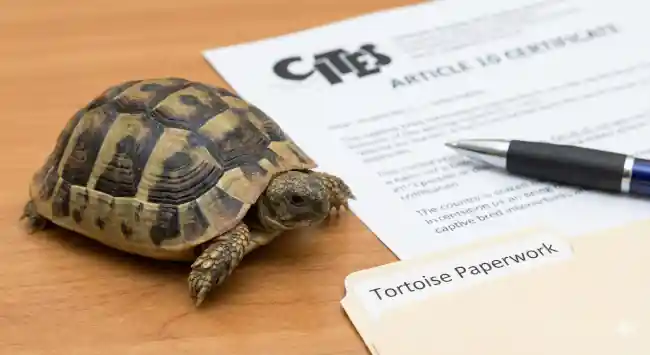
Do You Need a Licence to Own a Tortoise in the UK?
Navigating the laws around reptile ownership can be confusing. New keepers often worry about accidentally breaking the law, asking questions like: "Is it illegal to own a tortoise?" or "Do I need a special permit just to keep one?"
The straightforward answer is: No, you do not need a licence simply to own a tortoise as a pet in the UK.
However, the rules change significantly if you intend to buy, sell, or breed them. This is where CITES legislation and the famous "Article 10 Certificate" come into play. This guide breaks down exactly what paperwork you need to ensure your new pet is 100% legal.
Understanding CITES: Why the Species Matters
Tortoise species are protected under CITES (Convention on International Trade in Endangered Species). In the UK, they typically fall into one of two categories: Annex A or Annex B. Knowing which category your tortoise belongs to is the most important part of legal ownership.
1. Annex A (Endangered - Strict Paperwork)
These species are considered the most endangered. It is a criminal offence to sell, offer for sale, or display for commercial purposes an Annex A specimen without a valid Article 10 Certificate. Think of this certificate as the "logbook" or passport for the animal.
Tortoises that REQUIRE an Article 10 Certificate include:
- Hermann’s Tortoise (Testudo hermanni)
- Spur-thighed Tortoise (Testudo graeca)
- Marginated Tortoise (Testudo marginata)
- Indian Star Tortoise (Geochelone elegans) - (Moved to Annex A in 2019)
- Egyptian Tortoise (Testudo kleinmanni)
- Galápagos Giant Tortoise (Chelonoidis nigra)
- Radiated Tortoise (Astrochelys radiata)
- Ploughshare Tortoise (Astrochelys yniphora)
- Spider Tortoise (Pyxis arachnoides)
Buying Advice: If you buy one of these, the seller must hand over the original Article 10 Certificate at the time of sale. This certificate belongs to the tortoise, not the person. Never buy an Annex A tortoise on the promise that "paperwork will follow later."
2. Annex B (Threatened - Less Strict)
These species are still protected, but trade is less restricted. You do not need an Article 10 Certificate to buy or sell them within the UK, though responsible sellers should still provide proof of legal origin (like a receipt stating they are captive-bred).
Common tortoises that do NOT require a certificate include:
- Horsfield’s (Russian) Tortoise (Testudo horsfieldii)
- Leopard Tortoise (Stigmochelys pardalis)
- Sulcata (African Spurred) Tortoise (Centrochelys sulcata)
- Red-footed Tortoise (Chelonoidis carbonarius)
- Yellow-footed Tortoise (Chelonoidis denticulatus)
- Aldabra Giant Tortoise (Aldabrachelys gigantea)
How to Get a Tortoise Licence (Article 10)
If you are simply keeping your tortoise as a pet, you do not need to apply for anything. The "licence" (Article 10) is only required if you plan to use the animal for commercial purposes—which includes selling it or breeding it for sale.
If you breed Annex A tortoises and want to sell the hatchlings, you must apply to the Animal and Plant Health Agency (APHA) for a certificate for each animal.
Current Costs (DEFRA)
As of the latest guidance, the fees for CITES documents are structured per order:
- £31.00 for the first certificate.
- £1.50 for each additional certificate in the same application.
For the most up-to-date fee structure, please refer to the official DEFRA CITES Application Fees page.
Other Common Legal Questions
Can I sell antique tortoise shell?
This is a strict "no" in almost all cases. Trade in unworked tortoise shell is completely banned. Worked items (like antique jewellery) can only be sold if they are pre-1947 ("worked antiques"), but the burden of proof is high. For modern items, it is strictly illegal.
Summary for Buyers
If you are looking for a new shelled companion, don't let the laws scare you off. It is actually quite simple:
- Check the Species: Is it on the Annex A list above (like a Hermann's)?
- Check the Paperwork: If it's Annex A, ensure you leave with the yellow Article 10 certificate.
- Check the Microchip: Annex A tortoises over 60mm in length generally require a microchip to match their certificate.
By following these rules, you support responsible breeding and help protect wild populations from illegal poaching.